Tuesday, October 1, 2024

Happy Birthday, Citizen Carter; Happy Birthday

Had James Earl Carter not been President, we’d still be reading today that a remarkable American has become a centenarian.

This young man from tiny Plains, Georgia aspired to stretch out into the world while staying rooted in cotton and peanut country. 1n 1942, he appealed to Georgia Congressman Stephen Pace for appointment to The US Naval Academy (which Ann and I visited last year with my niece and nephew and their spouses) and was graduated with distinction in 1946. After two years on surface ships, he applied for submarine duty, serving as electronics officer dealing with a new SONAR array development. He rose to become engineering officer, and eventually Exec Officer of SSK-1, the Barracuda.

Later, when nuclear sub development was undertaken, Carter sought entry, was interviewed and selected by then-captain Hymen Rickover, and was assigned to the Naval Reactor Branch of the Atomic Energy Commission to assist “in the design and development of nuclear propulsion plants for naval vessels.” (Carter joined in November of ’52; my Dad had left the AEC that previous June.)  

Carter was slated to become engineering officer on the Seawolf, one of the first nuclear subs. But in summer of ’53, his father died, leaving a struggling peanut farm. Lieutenant Jimmy Carter resigned to attend to family affairs and returned to Plains. In ’46, he and Rosalynn Smith, another Plains born and bred, had married. Now in civilian lives, Jimmy studied agronomy and Rosalynn studied finance and accounting; he grew and harvested, she managed the books. It was a partnership that lasted.

Jimmy and Rosalynn became stalwarts of the local Baptist Church, where Jimmy taught Sunday School over decades, well into the 21stC. Along the way, he

·       `` Revitalized his family peanut business.

·       `` Served as chair of the Sumpter County school board.

·       `` Gradually became a committed civil rights activist and an anti-segregationist Democrat.

·       `` Was elected to the Georgia Senate after successfully challenging a fraudulent election and winning the     court-ordered re-election.

·       `` Ran for and became Governor of Georgia, defeating Republican and Democratic segregationists.

·       `` As Governor Carter, he re-designed state government, consolidating over 300 separate departments        into 22, created youth development programs, education programs for the incarcerated, and equalized    state support for education between rural and urban areas.

·       `` Helped found, fund and promote Habitat for Humanity.

·       `` Fought for just and fair democratic elections elsewhere and formed a process for monitoring and            reporting on foreign elections, especially in Africa and South and Central America.

·        `` Wrote twenty-two books, one jointly with Rosalynn Carter (about which both said with a laugh that       they’d never make that mistake again.)

Of course, Jimmy Carter did become our 39th President, a presidency buffeted by Iranian revolutionary hostage-takers, OPEC’s embargo-inflation, born-again Christian idealism, and implacable Republican, real-politik hostility. (Barbara and I took our eldest, Frank, to Washington and stood on the white House lawn to see Carter greet Prime Minister Morarji Desai.) 

And, as an ex-President, Carter made the most of opportunities to play an elder statesman role on the world stage.

Happy Birthday, Citizen Carter; Happy Birthday.

Friday, August 30, 2024

Pesto Day, '24

Today was our annual rite of summer passage: pesto day -- an afternoon of cleaning garlic and basil, preparing walnuts, measuring extra-virgin olive oil, Pecorino Romano and Parmagiano Reggiano -- and drinking wine and listening to music and gossiping about friends and noshing on fresh pesto on piccolo como.  Result: such a satisfied and mellow mood plus 28 tubs of pesto to freeze, to use up and give away by next August. A highlight of our summer.


Thursday, August 29, 2024

What Are You Prepared to Say?

Today, in a group of friends on Zoom, one told us about her seatmate on a recent flight who commented that she was undecided, that she did not know for whom to vote. My friend said she found herself a bit tongue-tied and posed the question to the rest of us: what would you have said? A good question: one all of us should be prepared to answer over the next two months.

What’s your answer?

Some among us talked about safeguarding Democracy; others, about comparing Trump’s and Harris’ characters and values. For me, I sought to find common ground between Red and Blue, and then to argue for Blue priorities and approaches that address today’s household realities. My comments might go like this:

Trump is right when he says many Americans feel our nation is not well, that we have been going in the wrong direction. Take living costs: in April, the price of the standard USDA statistical basket of groceries was over $86, up more than 25% in the last five years. Yes, it’s fine that the rate of inflation is dropping, but prices have gotten painfully high.

Household incomes of the first three quintiles of the population, i.e., the poor, the lower-middle class, and the middle-class, have not kept pace. That inflation is down and incomes have begun to rise still leaves many families squeezed for kitchen-table costs. Car insurance, auto repairs, costs of eating out --  all are up. Until prices drop and/or pay increases sharply, many Americans will rightly feel less well-off than before.

COVID is still with us. We don’t seem to be able to enforce peace on the world anymore. Illegal immigrants keep coming, even though that too has slowed. And isn’t it wonderful that people all over the world want to come here? We must be doing something right.

 Trump exaggerates when he proclaims coming depressions, but he’s right that many Americans feel insecure. But – But.

But all of Trumps proposed fixes only make matters worse! And some of his ideas are total nonsense, such as rounding up 10 million immigrants and transporting them out of the country. Who’s going to find and hold them, and how? Who’s going to fly away 10 million passengers, and to where? What countries are going to take these 10 million folks? And anyway, if it could be done, who would install his gold-colored escalators and mow his golf courses?

Seriously, take cost of living and tariffs. Tariffs will increase the prices of kid’s back to school clothes and shoes, your pants and shirts, your underwear – making the squeeze on all but rich families even greater.

Take his tax cut proposals: they favor the upper two quintiles of the population, giving the upper-middle class and upper class even more advantage over the rest of us. And not taxing Social Security and tip income? That will drive the deficit up, make the dollar weaker, increase our national debt, increase interest rates and make it harder for small business to find the money to invest and grow –- and most of our job creation comes from small businesses. Not taxing tips only adds to the deficit and leave the Social Security trust fund short. Harris and Trump are both wrong on tip taxation.

No, while Trump’s concerns about America’s problems may be right, his answers are dead-wrong and help only billionaires like himself.

Harris and Walz are on the right track and have the right priorities: improve education, competition, child-care. Give women freedom to choose to work by providing universal child-care. Extend child tax credits to strengthen families’ ability to raise healthy and confident children. Underwrite signing bonuses to attract new, top-of-class teachers and promote improved public schools. Welcome legal immigrants, make it easier to come here properly, and provide a path to earned citizenship. Rein in banks using your savings to speculate – what used to be called Glass-Steagall –  and restrict selling off your home mortgage and car loans to investors at inflated, phony prices. And raise the National minimum wage. Use anti-trust and consumer protection powers granted by Congress to stop huge mergers and rein in big enterprises. Foster competition which drives prices down. Increase inheritance taxes on the ultra-wealthy to slow down passing on wealth to offspring who haven’t earned it.

And, overseas, stop molly-coddling dictators and stand up for democracies, justice, and fairness.

Harris and Walz, in my opinion, are the trustworthy choice and have the right priorities, values, and programs that address our problems and opportunities.


Yes, too much; too long-winded, but you get the drift. Your seatmate may not care about or understand risk to our democracy; he or she may find Trump’s kick-ass personality and crudeness entertaining, a vicarious venting of their frustration. But everyone cares about their family’s or household’s daily sense of well-being. That’s what I would focus on.

You may well have a very different answer; indeed, you may favor Red over Blue proposals. But that’s not the point. The point is to have an answer ready and to encourage the undecided to make up their mind and vote. America needs concerned and thoughtful voters this fall as never before. 

So, what are you prepared to say to the undecided you encounter?


Friday, August 23, 2024

Where Have I Been. Why Have I Not Posted Since May?

Why have I not posted since late May?  It’s been an up and down summer – and on this chill and rainy Seattle day it feels as summer is coming to an end. I hope September delivers its usual glorious Indian Summer on the Salish Sea – especially since family will be gathering around the finish line as I end this 90th lap around the sun.

My last post, the Boeing letter below, was from Bayonne, France, laying at the feet of the board the broken body of Boeing’s reputation for reliability. Bayonne is not far from Toulouse, Airbus-land; they, too, are not unblemished. At least the new Boeing CEO, Kelly Ortberg, intends to office much of the time here in Seattle, where the bulk of Boeing’s employees live and work.

Cathedral Sainte-Marie
de Bayonne


Ann and I were in Bayonne on what was to be a three-week tour of Basque Country, through French Aquitaine, Spanish Gipuzkoa, Navarre, and Biscay, and winding up in northern Portugal. But an ill-wind blew: in turn, we each contracted pneumonia. I spent four days hospitalized in Pamplona – no running any bulls for me, but receiving extraordinary care. (When's the last time American doctors made house calls -- 1946, 1948? We had two to our hotel room, neither of which cost us a cent!) 


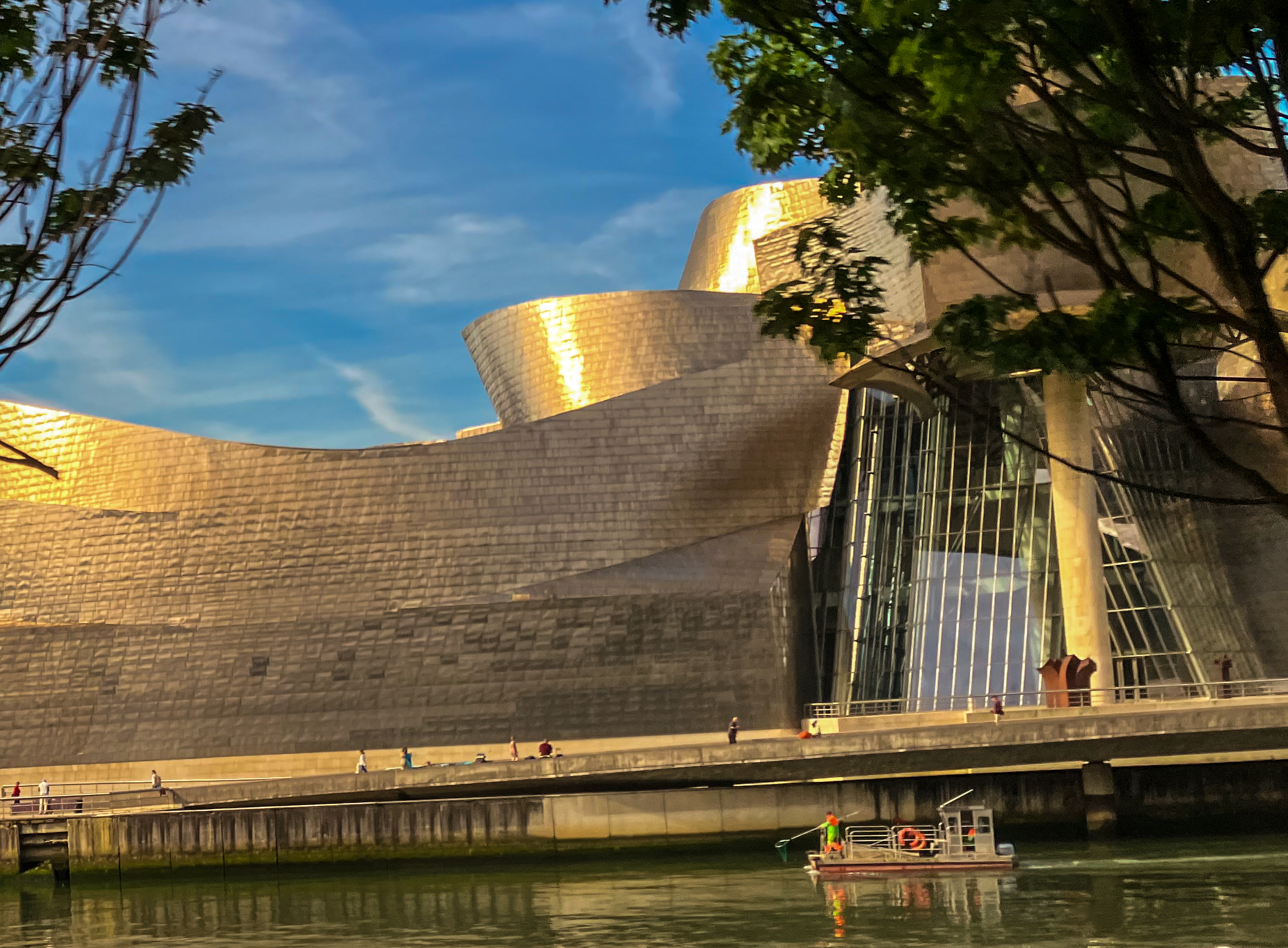
We ended our tour early and flew for home. But what little we had seen – Carcassonne, Auche, Bayonne, Biarritz, San Sebastian, Bilbao – was wonderful, i.e., truly, filled with wonder.


Bilbao -- and a cleaned river

Carcassonne

Ann has fully recovered; I still easily get short of breath and am more tippy than before. It didn’t stop me from enjoying the first three weeks of July’s Seattle Chamber Music Festival – three concerts each week plus board events plus hosting in our home cellist Paul Watkins for a week. And then, last week in July, we decamped for summer school at Cambridge University.

Selwyn Hall -- and that's half of it


That was a magical experience: to be bearing a student ID once again; to attend two, small (<30) lively classes a day, plus plenary lectures each morning, afternoon and evening; to live in Selwyn College and take breakfast and dinner in its faux-medieval dining hall with hundreds of other students – young and old, from 32 countries around the globe – all interested and interesting people; to be surrounded by a university town offering pubs and restaurants, drama and concerts, poetry readings and museum events and history around every corner. 

A Plenary on Cooling the Arctic 


Ann took two two-week courses: World Under Stress taught by Sir Tony Brenton, former UK Ambassador to the Russian Federation, a man who has negotiated with Putin, and, with me, Rome and China – a Comparison of Empires. In addition, I took two one-week courses: Henry IV, Part One and The Hundred Years War. I fell into bed each night exhausted but so mentally stimulated that I had trouble falling asleep.

Plus a side trip to Canterbury and five days in London. God and good health willing, we will go again next year.

At Selwyn College, Cambridge

So, thus the long silence from Northwest Ruminations – not that anyone would notice. In England, still tippy, I resorted to a walking stick. Yesterday, I gave a speech to my luncheon club: My Magic Stick, my New BFF. 

I recounted the magical effect my walking stick projects onto people around me – at Heathrow, early boarding of aircraft; in the London tube, women in their late 50’s getting up and eagerly offering me their seat; a briefcase wielding business man jay walking through traffic to get to my side and ask if I was all right as I leaned on a post-box to catch my breath; the next day, his opposite, a tattooed, studded, skin-head, stepping aside to let me pass with a deferential nod of his shaved head; being plucked out of line and escorted to the door of the British National Museum – a magical stick, indeed.

Now summer appears to be winding down, alas. But, you’ll hear from me more frequently.   


From Cheapside

Monday, May 27, 2024

Re Boeing: a now open letter to Sen Cantwell and Representatives Larson and Smith

The following letter was posted last week to the offices of Senator Maria Cantwell and representatives Smith and Larson. Cantwell chairs the Committee on Commerce, Science and Transportation. Smith is ranking member of House Armed Services Committee. Larson is ranking member on House Transportation and Infrastructure Committee and serves on its Aviation Sub-committee. These are powerful voices on trade, defense, transportation, aviation and the FAA.   


Fletch Waller

Senator Maria Cantwell

Representative Adam Smith

Representative Rick Larson                                                                                                                       21 May’24


Dear Senator and Representatives:

Boeing Corp is a national asset that is being diminished in value by feckless leadership that persists even after its problems and flaws have become so glaringly evident.  I write as a concerned citizen of Puget Sound; when I discuss Boeing with other non-employees, like myself, residents here in the greater Seattle area, I often get a rueful shrug, a "yeah, they have sure screwed up”, but no sense of being a constituent with a real stake in the company’s performance. Boeing is still, despite its administrative and manufacturing moves away from Puget Sound, our region’s largest employer. Its future is in large part ours.

The latest disheartening evidence that the leaders of Boeing just don’t get it is their $30 million goodbye gift to Calhoun, who was supposedly overseer of the company’s attempts to right its ship after causing hundreds of passenger deaths, losing market leadership to Airbus, losing millions of dollars, and causing its customers untold millions more as portions of their fleets were grounded. To add injury to insult, the Directors voted Calhoun onto the Board! What are they thinking!? It confirms my hunch that the directors don’t know what they don’t know. Moreover, it appears that they do not care to know.

The Directors are from away, as my Newfoundland grandfather would say. There is not one Puget Sound-based Director on the Boeing Board. Think of that: the largest employer in the region without one Director on its board who lives and works in the region.

It’s not just Puget Sound that has a large stake in Boeing’s performance and leadership, it’s the US’s also. As our nation’s largest exporter, all citizens have a stake. At a small dinner with Alan Mullally years ago, his first sentence in an after-dinner presentation to us was a stunner: “Britain, Germany, France and Spain are waging war on Puget Sound.” That was before Boeing leadership decamped to Chicago, before choosing as President a Jack Welch acolyte rather than a gifted, engineer problem-solver steeped in the aircraft business (and allowing Ford to benefit from Mullally’s skills and leadership), before shifting HQ again into the Washington DC area.

I don’t know aircraft or defense industries, but I do know first-hand of leadership and directorship. You three and all your constituents have a stake in how Boeing pulls out of its nose-dive. What are your options to intercede? To bring national interests to bear? To help restore the value of this national asset? Arise.

Sincerely yours, a frustrated and concerned citizen,

 FletchW

 Fletch Waller

Tuesday, May 21, 2024

Report from the Urban/Rural Divide

Week before last, with four fellow political progressives, I ventured into Eastern Washington to visit and converse with political conservatives about the urban/rural divide. We found on the surface pretty much what one might expect: the divide is real; the distrust deep and damaging, urbans more Democrats and rurals more Republicans. But beneath that superficial simplicity we found fascinating complexities, ambiguities, and sensitivities. It was a rich and rewarding experience.

The trip was organized by two folks from each side, urban and rural, blues and reds, under the dual umbrellas of One Small Step and Braver Angels. One Small Step is a creation of NPR’s StoryCorps. It brings together political opposites not to argue or convert each other, but to converse, to understand the roots of political views, of how one’s political beliefs were formed by family, by upbringing, by lived experience. The goal is to restore civility, to bridge the divisions that separate us, “to” (from StoryCorp’s mission statement) ”help us believe in each other” and in our democracy. Its method is to broker formatted conversations between opposites, one couple at a time. By engaging under agreed ground rules, we learn to listen to and respect one another. I have had three One Small Step conversations and look forward to more.

Braver Angels takes a slightly different approach but its purpose, “to de-polarize America,” is fully in sync with that of One Small Step. Braver Angels is a national movement that has grown out of 16 people, eight Donald Trump voters and eight Hilary Clinton voters getting together in a South Lebanon, Ohio church basement seven years ago to see if they could talk to each other without the rancor and disrespect they agreed are so dangerously divisive. They resolved to carry on, spread the idea and took the name “Better Angels” from Lincoln’s first inaugural address, in March of 1861 by which time seven Southern States already had voted to secede from the United States. Lincoln’s inspiring passage:

“We are not enemies, but friends. Though passion may have strained, it must not break our bonds of affection. The mystic chords of memory, stretching from every battlefield and patriot grave to every living heart and hearthstone, all over this broad land, will yet swell the chorus of the Union, when again touched, as surely they will be, by the better angels of our nature.”

Yes, his appeal failed; God forbid we fail again. The risk is real. 

Despite a copyright challenge that forced a name change to Braver Angels, the organization now has branches in all 50 states. Rather than One Small Step’s person by person, get to know one another approach, Braver Angels takes on issues. 

Though still small (only 12,000+ dues paying members) but growing and in alliance with over 100 other orgs, they have held over 3,200 debates, live conferences, panelist conversations before audiences, Zoom conferences, and two annual, national conventions. You want to attend the convention? You must sign up with a politically opposite: voting delegates must be evenly matched, red and blue.

Generally, both Braver Angels and One Small Step find it easier to enroll blues than reds. Are you a Red; are you worried about our increasingly disrespectful and hostile polarization? Then, c’mon – sign up to one or the other or both and help de-polarize America.

            https://storycorps.org/discover/onesmallstep/

            https://braverangels.org/ -- issues basis

With whom did we meet and what did we do?

Our trip was arranged by Judie Messier, our go-to One Small Stepper. (All five of us are members of Wider Horizons, through which we have come to know one another.) We were hosted by and stayed in the home of two Utah-raised LDSer’s. Rural yahoos, right? Wrong! They are both graduate nuclear physicists, he retired from Rickover’s staff. She is a Republican of the Milton Freidman/Frederick Hyek schools and articulate on both, a district officer of Braver Angels, conflicted over a Trump candidacy and her vote. She says they likely call her a RINO. I would guess she will not vote for Biden. Her husband, a retired Commander, I’m guessing will vote party – while taking time to help his high school grandson with their physics homework. Yes, their; the grandson is transitioning with full acceptance and loving support of his grandparents. Not so simple after all. In their own way, as elite in their rural community as we urban “elites” about whom they complain. 

The #1 issue for our hostess: water and we west-side environmentalists who want to tear out the Snake River dams. She is the activist and a delightful conversationalist; he chooses to support her and stay in the background. New friends.

All five of us blues had One Small Step conversations. Mine was with a health care navigator and consultant, a conservative red, who worked in Seattle for most of her career but chose to return to her small-town roots where she helped found the co-housing venture in which she now lives. She is well-read, incisive, a jazz promoter, and a delightful luncheon companion. Again, not fitting any shallow stereotype of the red, rural conservative. We will stay in touch.

That evening there were fourteen of us for dinner put on by our hostess and host, we five progressives and nine small town or rural conservatives, all proponents of Braver Angels. At two tables of seven the conversations about urban and rural became candid, passionate, sometimes unguarded. After-dinner we all convened in the living room to share what we had learned and felt.

The next morning, we five watched a national Braver Angels Zoom conference on rural/urban relations moderated by Sue Lani Madsen, one of our dinner group the night before. Sue Lani is a very articulate journalist, activist, Republican leader, volunteer fireman (fireperson?) and skilled EMT. She also blogs. A recent entry: The party whose nominee is under 70 and does not have a worm in his brain wins.

After the Zoom session, we went out to the Madsen goat ranch in Edwall, WA. After 14 years as Range Management Specialist with the Natural Resources Conservation Service, Craig Madsen tired of bureaucracy and founded Healing Hooves, a weed control, vegetation removal, and ecosystem management company -- using goats, what else? He and his 250 goats serve individual households and land owners, and also have contracts with towns, school districts, hospitals, and so on throughout the state.  


Rural goats confront urban progressives (without revealing their political leanings.)

What did we hear?

It’s not just a Washington problem, of course. Like Seattle, Austin, Atlanta, Minneapolis, Chicago, Columbus, and countless other blue cities are afloat in seas of red. And the more urbanized the state, the more frustrated the rural dwellers. The most urbanized states: Cal @ 94.2%, Nev., N.J., Fla, Mass @91.3%. The Least urbanized: Vermont @ 35.1%, Maine, W. Va, Miss, Montana @53.4% (Where our kids and grandkids live: NY, @87.4, Washington @83.4, Michigan @ 73.5, Minn @ 71.9, Ark @ 55.5%) Perhaps this helps explain why some Oregonians (80.5%) want to secede and be annexed by Idaho (69.2%.)

It’s nothing new. The derogatory term “city slicker” is from the 19thC; “country bumpkin” dates back to the 17thC! Country folk have long been suspicious of and alienated from city dwellers; it’s deeply ingrained. My mother was an upstate NY, tiny-town girl. I recall my Grandmother’s outrage when my orphaned cousin, whom they raised as their son, brought home an “Eye-talian” girl.

We heard grumping about “elites.” Yet Sue Lani and Craig Madsen are elites; our physicists host and hostess are elites; the guy with a Masters in Agronomy from WSU farming and managing by computer hundreds of acres of wheat in the Palouse, he is an elite; the John Deere dealer with $4,000,000 of inventory on his small town lot is an elite.

We heard about rural areas not getting their Fair Share, whatever that means. In fact, most rural counties receive more state support for roads, schools and so on, than they pay in to the state in real estate and sales taxes. But that does not make the rurals feel any better.

The myth of the self-reliant homesteader is powerful. That they relied on the Federal government’s subsidies to the railroads, on the government to break treaties and confiscate native Americans’ lands, on government grants of homesteading rights and free land, are conveniently left aside: how the west was "won".  

Insights

Phil Gerson, one of we progressive urbanites, offered an important thought: people who are rooted in place – farmers, small town business owners, people who prefer their tight, comfortable community – are naturally cautious, read conservative, about changes to their place, whether it's changing government regulations, environmentalism, influx of immigrants, whatever. Their place is their identity. Little wonder, observed Phil, that people rooted in place are more likely than not to be conservative by nature.

By contrast, those of us whose identity has to do with skills and talents, are more mobile. We likely cluster in cities among a diversity of people and encounter a diversity of ideas. We can more easily than our rural cousins move from one city to another as the market for our skills and talents change. (I, for example, was raised in Washington -- the other Washington, schooled in upstate New York and Boston, raised my family in Minneapolis, and worked in Seattle, Southeast Asia, and Brig, CH. Now retired, it is I who is rooted in place, by choice.) 

Sue Lani observed that partisanship can be a healthy route to solutions. What we need, she said, is better partisanship, to which I would add, pragmatic rather than ideological partisanship. Sue Lani and Phil are working together to create a state-wide conference on urban/rural collaboration and cooperation, a worthy effort deserving of our support.

I come away impressed . . .

. . . by the values and character of those we met. These folks value honesty, enterprise, mutual support, and bonds of respect and community. They are likeable. If we can allow our and their better angels to prevail, we will bridge the natural divide between rural and urban, and truly make the American idea work again for all of us. If . . ..

Tuesday, May 14, 2024

Salmon, Cedar, Rocks, and Rain -- Right in Our Backyard

 I haven’t blogged in a while, blocked by appalling genocidal wars, campus demonstrations, civil and criminal trials, hometown-company mis-steps, and frightful polls, so a trip to the outdoors was tonic to clear the brain. Our friends Pam and Jim put us onto the Olympic Peninsula, just the tonic I needed.


Right in our backyard: Salmon, Cedar, Rocks and Rain*

Some of you, I am sure, are very familiar with the Olympic Peninsula. I did not discover the richness of the Olympic Peninsula and the Olympic National Park until recently – long after having put my backpacking and mountain hiking days behind me.

Hurricane Ridge, 1986
When I came here in 1985, at age 50, my then-wife had little interest in exploring the outdoors unless it featured fairways, sand traps, and greens and had a 19th hole available. No way would she be sleeping on the ground, thank you very much. While she golfed at our place in Palm Desert, I had half the year, i.e., winter and early spring, based here in Seattle, but my job entailed constant travel. What little local exploration I did was pretty limited. I made one photo outing to Hurricane Ridge in spring of 1986 but that was it for the Olympics.

After our divorce in ’87, I resigned from the Seattle Golf Club (no one resigns from the Seattle Golf Club!), gave away the sticks and began to explore. But it was eastward I looked, toward ski areas, Alpine lakes, Mt. Rainier, and the Cascades. I climbed Rainier in ’88 (@14,411, highest in the lower 48.)

 After meeting Ann and marrying in ’91 it was skiing in the Methow and Sun Valley, mountain hiking on Rainier and in the Cascades, exploring Mt. Saint Helens; we climbed Adams together; sailed in the San Juans and Gulf Islands. I fly fished the Deschutes and in BC – but all this time, ignored the Olympics.

A month or so ago, with friends Jim and Pam, we planned an Olympics trip. I began to bone up on what this Olympic Peninsula has to offer. And OMG, what I have missed all these years!  

The Olympic National Park which centers the peninsula is, in the lower 48, the largest wilderness uncrossed by roads; you can drive 20 or so miles into it from various spots on its perimeter, but to go through it – only backpackers can navigate through the Dan Evans Wilderness which is the center of the park, a three-night, four day trek. Jumbled mountains, meandering rivers, fluky weather. Tuesday, Ann and I drove 18 miles from sea level in sunny Port Angeles to 5,200’ – one mile up in 18 miles --

Hurricane Ridge 2024

and into a full snowstorm that blocked all views of Hurricane Ridge.

We visited the Ho Rain Forest – nice but unnecessary for there are rain forests nearly everywhere on the peninsula’s Southwest side. But the Ho is the departure point for hiking to and climbing Mt. Olympus. Rain forests are spooky and silent -- not so silent if you stand still and listen hard, Moss-draped, gigantic, thousand-year-old spruces, pines, firs, cedars – myriad ferns and mosses: botany on adrenaline.

Can you picture the peninsula? It’s arrowhead-shaped, with its point, Cape Flattery, to the northwest, as far from Key West as you can get short of Alaska or Hawaii. It’s bounded on the north by the Straits of Juan de Fuca; on the east by Hood Canal; on the south by Grays Harbor, Hoquiam, Aberdeen and connections to Olympia; and on the west by the raging Pacific, which is anything but pacific along that 140-mile rocky, hay-stacked shore. (And it houses some delightfully, outrageously named towns: try Humptulips for one, or Dosewallops.)   

It was on that hay-stacked shore that we joined Jim and Pam at La Push, HQ of the Quileute Reservation. The town speaks of tribes without casinos or oil: trailers, RV's or ramshackle clapboard houses, yards full of junked cars and rusting appliances. The town lives on commercial fishing, logging, and tourism.

The Quileute Oceanside Resort is owned and operated by the tribe, so I mistakenly expected little. In fact, we shared a beautifully appointed two-bedroom house right on the drift-wood studded, surf-pounded beach with haystacks just off-shore. The house is quality construction and tastefully, fully appointed. 

The view from our living room @ Quileute Oceanside Resort

And those beaches -- #’s 1,2,3, and Rialto (I think the Quileutes need some branding help, don’t you?) -- those beaches go on forever. Did it rain? Of course: cold, wet, and windy – that comes with the territory. 

Quileute #2

But, if fresh water and lake lodges are your thing, stay as we did one night in Quinault Lodge on Lake Quinault, in the Quinault Indian Nation (no visa needed.) The room was a bit weird, but the restaurant is excellent and the staff couldn’t have been more pleasant and proficient. The menu creative and wine list ample. 

Lake Crescent is the lake not to miss. Stunningly beautiful, as pretty as any we hiked around in Switzerland during my tours of teaching hospitality management at University Center, Cesar Ritz. Lake Crescent Lodge we’ll try next time.

The Quileute and Quinault are two of six indigenous language families on the peninsula – Makah, Klallam, Chemakum, Twana, Chehalis, Quinault, and Quileute. There are nine major tribes within those language groups, all with their distinctive  traditions, their prides and woes, but all share a will to survive and thrive. In each of the nine major tribes there are sub-clans that claim their own distinct identities.

Some thrive more than others – the Quileute are dependent on fishing, lumbering and tourism; others have their casinos, some industry, but always tourism – theirs is the Olympic peninsula. Save for a few Anglo settlements such as around Gray’s Harbor and up at Port Angeles, Sequim, Port Townsend, the tribes and indigenous folk are the People of the Peninsula. This is their land; they have fought for it, care about it and fight for the right to be care-givers to it and its wildlife.

And if wildlife is your thing, have deer, Roosevelt elk, sea otters, river otters, black bear, (grizzlies may be coming,) grey whales, humpbacks, orcas, marmots, mountain goats (being removed and wolves being re-introduced), seals, lynx, cougar, bobcat, five species of oysters, eleven of clams, plus mussels, urchins, and over 300 species of birds. While Ann and I ate lunch along the shore at Port Angeles, we watched a river otter gathering her lunch off the rocks right below us.

And, of course, the salmon – five species of that miraculous, spiritual symbol of life sacrificed for generations to come. Frank N and I camped out by the Elwha twelve years ago, when the first dam was removed. Now the salmon have returned; harvestable, sustainable runs are nearly back.

Salmon, Cedar, Rock and Rain*. Go and explore this treasure of ours. All four sides of it – and if you’re still young enough, backpack that interior. The best wilderness area of the Lower 48 awaits you – right in my backyard.

Fort Worden (or is that a Hopper?)
*Plagiarism alert: I “borrowed” my title from Salmon, Cedar, Rock and Rain, a beautiful collection of essays about and photos of the peninsula edited by Tim McNulty and published by Braided River, an imprint of Mountaineer Books, 2024